/Imagine(Cowboys)
31 July — 29 August 2025
Thought Forms Gallery
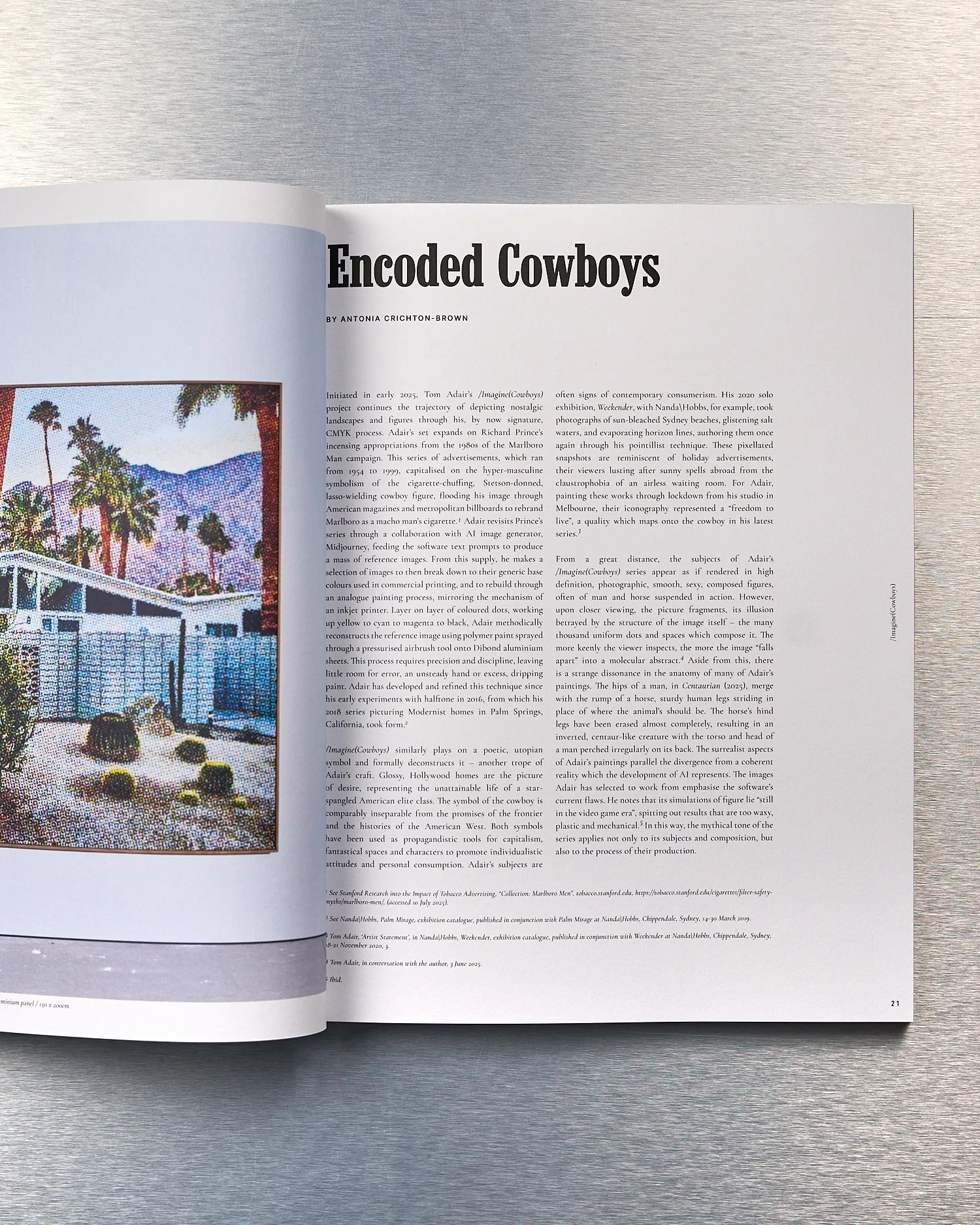
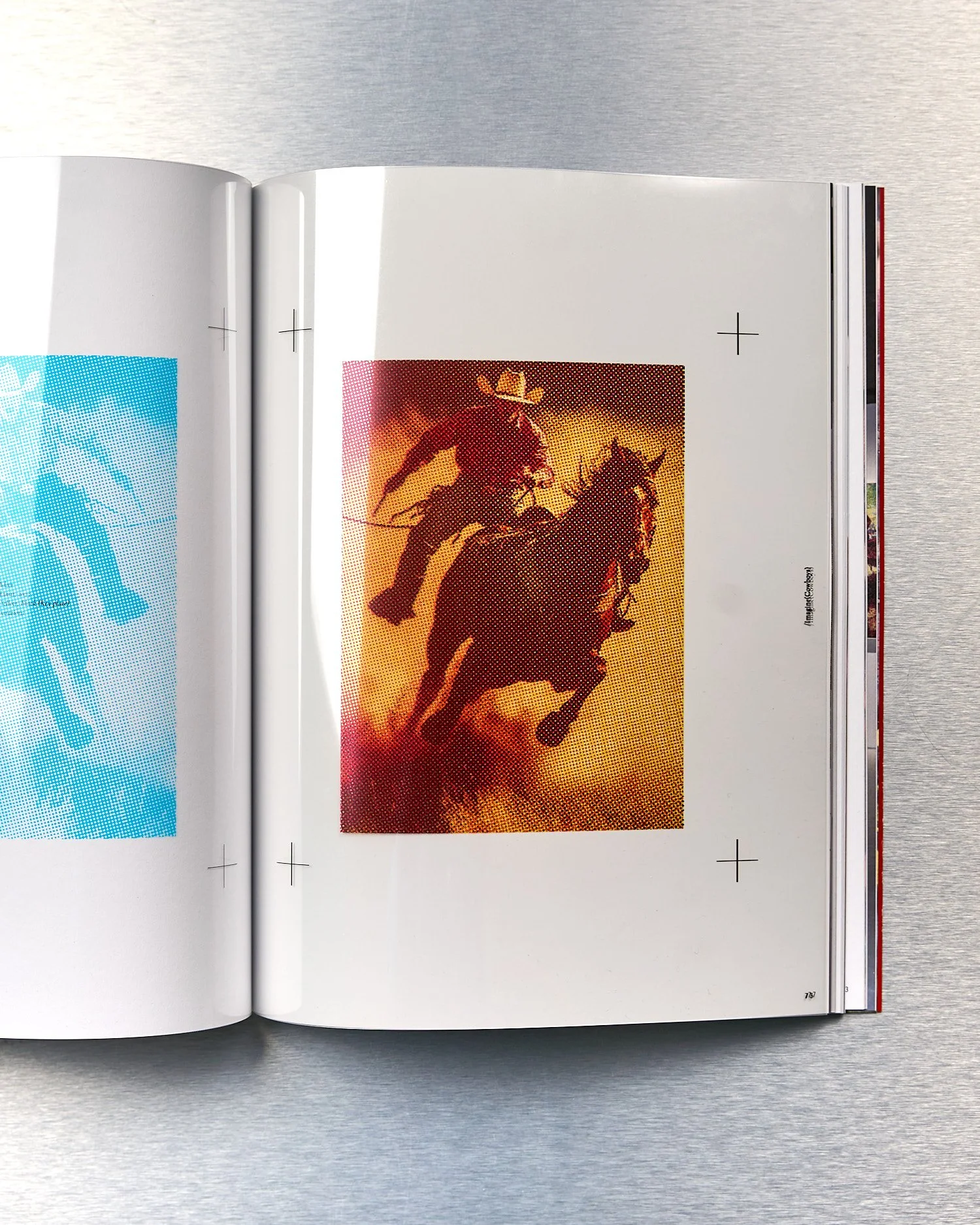
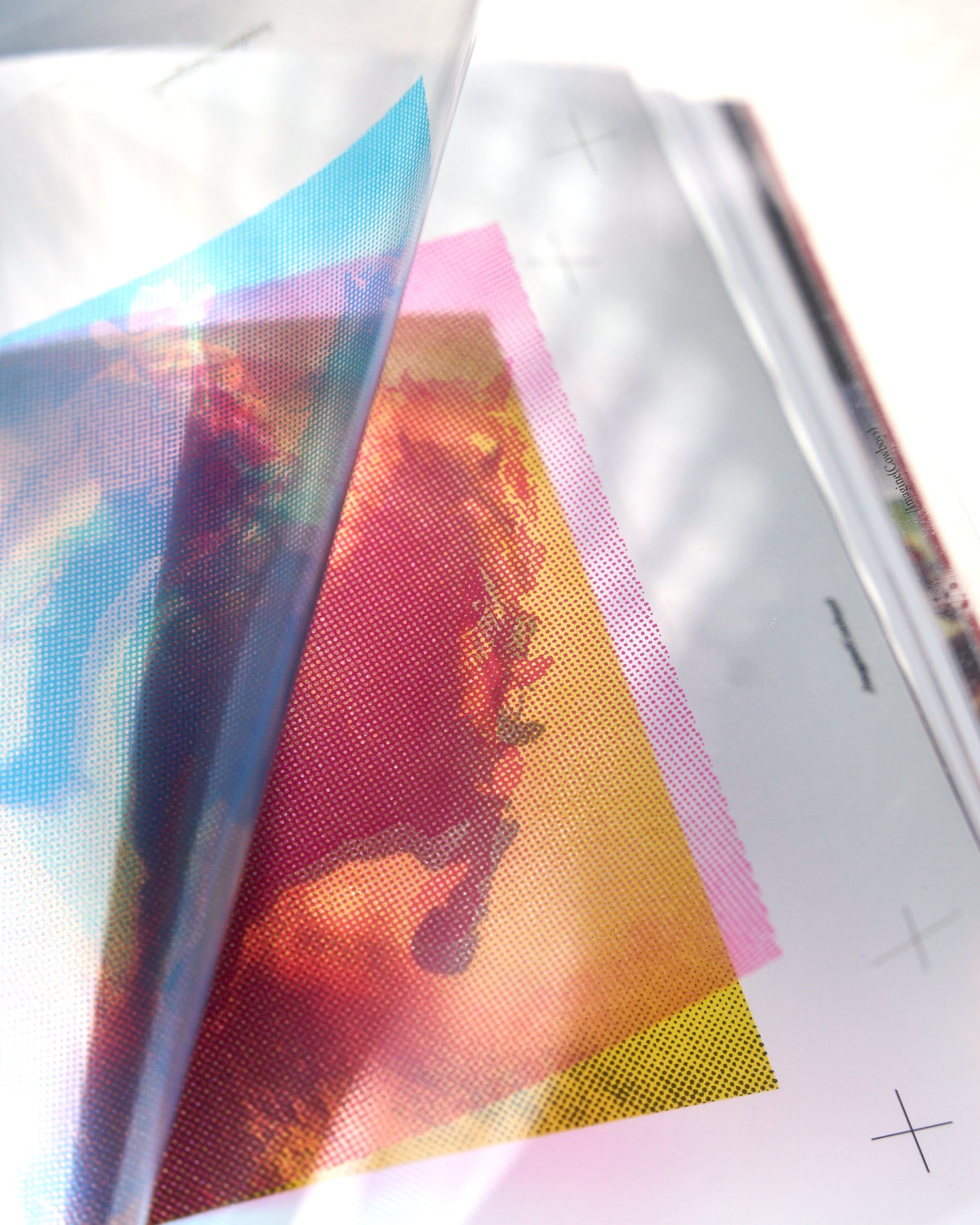
Initiated in early 2025, Tom Adair’s /Imagine(Cowboys) project continues the trajectory of depicting nostalgic landscapes and figures through his, by now signature, CMYK process. Adair’s set expands on Richard Prince’s incensing appropriations from the 1980s of the Marlboro Man campaign. This series of advertisements, which ran from 1954 to 1999, capitalised on the hyper-masculine symbolism of the cigarette-chuffing, Stetson-donned, lasso-wielding cowboy figure, flooding his image through American magazines and metropolitan billboards to rebrand Marlboro as a macho man’s cigarette. Adair revisits Prince’s series through a collaboration with AI image generator, Midjourney, feeding the software text prompts to produce a mass of reference images. From this supply, he makes a selection of images to then break down to their generic base colours used in commercial printing, and to rebuild through an analogue painting process, mirroring the mechanism of an inkjet printer. Layer on layer of coloured dots, working up yellow to cyan to magenta to black, Adair methodically reconstructs the reference image using polymer paint sprayed through a pressurised airbrush tool onto Dibond aluminium sheets. This process requires precision and discipline, leaving little room for error, an unsteady hand or excess, dripping paint. Adair has developed and refined this technique since his early experiments with halftone in 2016, from which his 2018 series picturing Modernist homes in Palm Springs, California, took form.
/Imagine(Cowboys) similarly plays on a poetic, utopian symbol and formally deconstructs it – another trope of Adair’s craft. Glossy, Hollywood homes are the picture of desire, representing the unattainable life of a star-spangled American elite class. The symbol of the cowboy is comparably inseparable from the promises of the frontier and the histories of the American West. Both symbols have been used as propagandistic tools for capitalism, fantastical spaces and characters to promote individualistic attitudes and personal consumption. Adair’s subjects are often signs of contemporary consumerism. His 2020 solo exhibition, Weekender, with Nanda\Hobbs, for example, took photographs of sun-bleached Sydney beaches, glistening salt waters, and evaporating horizon lines, authoring them once again through his pointillist technique. These pixellated snapshots are reminiscent of holiday advertisements, their viewers lusting after sunny spells abroad from the claustrophobia of an airless waiting room. For Adair, painting these works through lockdown from his studio in Melbourne, their iconography represented a “freedom to live”, a quality which maps onto the cowboy in his latest series.
From a great distance, the subjects of Adair’s /Imagine(Cowboys) series appear as if rendered in high definition, photographic, smooth, sexy, composed figures, often of man and horse suspended in action. However, upon closer viewing, the picture fragments, its illusion betrayed by the structure of the image itself – the many thousand uniform dots and spaces which compose it. The more keenly the viewer inspects, the more the image “falls apart” into a molecular abstract. Aside from this, there is a strange dissonance in the anatomy of many of Adair’s paintings. The hips of a man, in Centaurian (2025), merge with the rump of a horse, sturdy human legs striding in place of where the animal’s should be. The horse’s hind legs have been erased almost completely, resulting in an inverted, centaur-like creature with the torso and head of a man perched irregularly on its back. The surrealist aspects of Adair’s paintings parallel the divergence from a coherent reality which the development of AI represents. The images Adair has selected to work from emphasise the software’s current flaws. He notes that its simulations of figure lie “still in the video game era”, spitting out results that are too waxy, plastic and mechanical. In this way, the mythical tone of the series applies not only to its subjects and composition, but also to the process of their production.
Adair’s interface with AI explores the human capability to perform the functions of technology. By reproducing an image by hand as if it were machine printed, Adair challenges the escalating mechanisation of human skill sets. His process unpicks the fast work of technology and, in doing so, slows down our engagement with images, recalling our agency to resist the numbing pull of an algorithm. The texture of Adair’s paintings is a defining difference to the flatness of their stock references viewed on a digital display. The thick grain of these references is emphasised by Adair’s stippling technique. This granulation, which conveys an almost scale-like appearance, alludes to film photography and contributes to the hazy atmosphere of his works. The paintings’ texture also hints at the source images’ reproduction, resembling the moiré, or interference patterns, created in photographs taken of a monitor using another device with a digital screen. Whether a characteristic of the source image, or a feature of Adair’s own design, this references Prince’s practice of ‘rephotography’. Prince is often criticised for disrespecting intellectual property rights, an issue which is also raised by developers using datasets that are not commons to train AI to generate images. Adair’s manipulation of Prince’s work using AI adds to this discourse, investigating the boundaries of appropriation and authorship in art.
The physicality of Adair’s paintings contrasts with their digital source images’ lack of material structure. This presence, or a work of art’s “unique existence at the place where it happens to be”, as Walter Benjamin wrote in 1935, is “the prerequisite to the concept of authenticity”. The physical changes to Adair’s works as they scar from their collection and display over time is a process that is unmatched in the life of a mechanical reproduction. By transplanting an image from its digital home to the physical world, Adair exposes it to the process of decay over time. The experience of Adair’s paintings disintegrating with greater proximity enacts the cultural obsolescence of their subject. The closer the viewer positions themself in relation to Adair’s works, the more flawed their image appears, suggesting that – in spite of technological reproduction – the once potent symbolism of the cowboy and the American West is not only a fallacy but a relic of the past.
What is the purpose of painting in the digital age when our imaginaries can be captured in a matter of seconds? By representing a shift in the way we consume images, Adair’s /Imagine(Cowboys) gives insight into how our perceptions are changing due to technology. Through this series, Adair demonstrates a method for working reciprocally and productively with AI rather than dismissing its use in a fine art context. Adair’s paintings hint at the potential for AI to reveal aspects of our cultural reality of which we ourselves are unaware. /Imagine(Cowboys) presents us with a view that AI image generating software does not necessarily indicate a break with tradition, but that every expression of art is a synthesis of what has come before.
Antonia Crichton-Brown
July, 2025
www.thoughtformsgallery.com.au
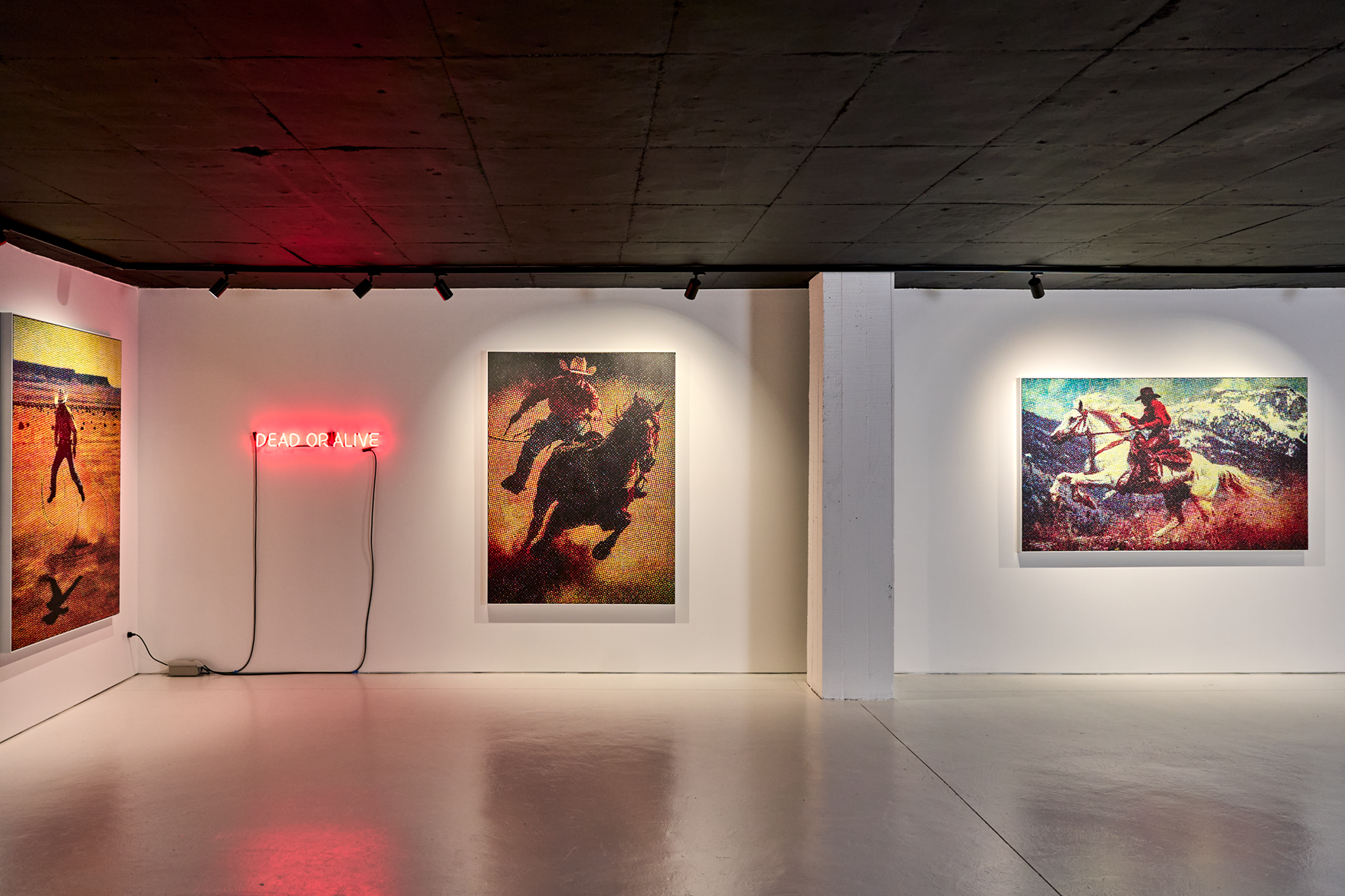
Gallery Installation
Thought Forms Gallery, Melbourne
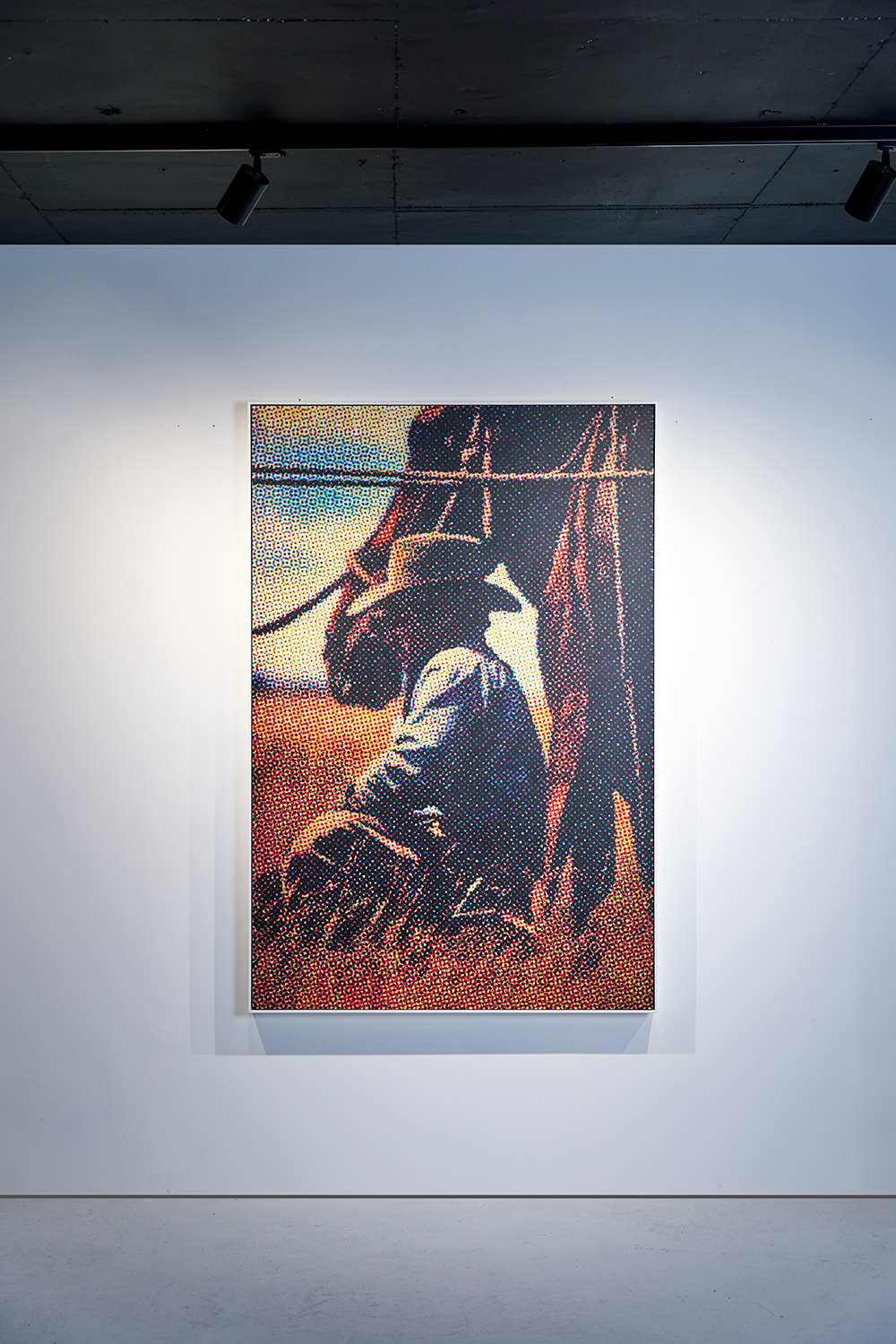
Ego Death, 2025
CMYK airbrush polymer on aluminium, Oak Frame
113x170cm
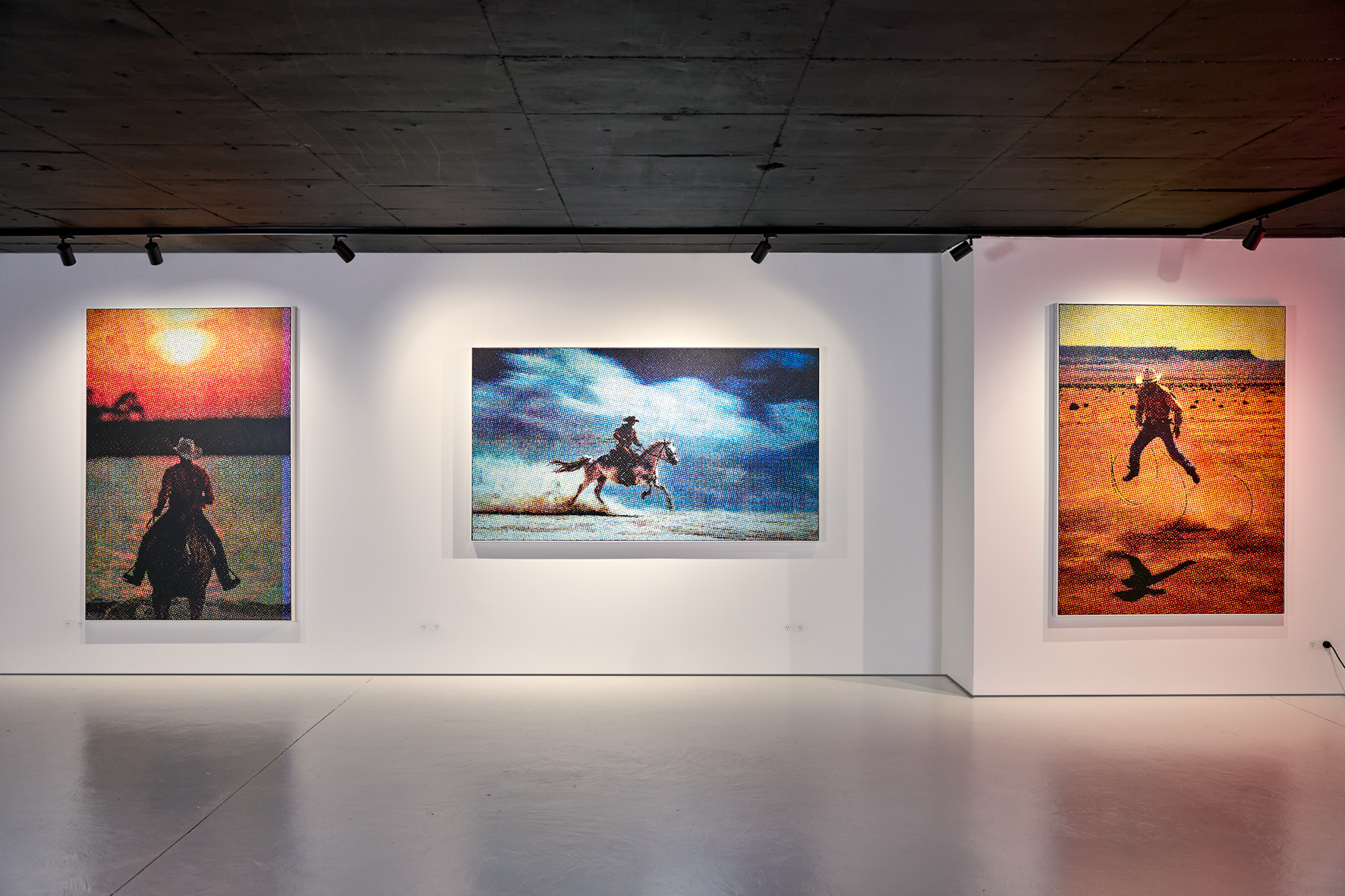
Gallery Installation
Thought Forms Gallery, Melbourne
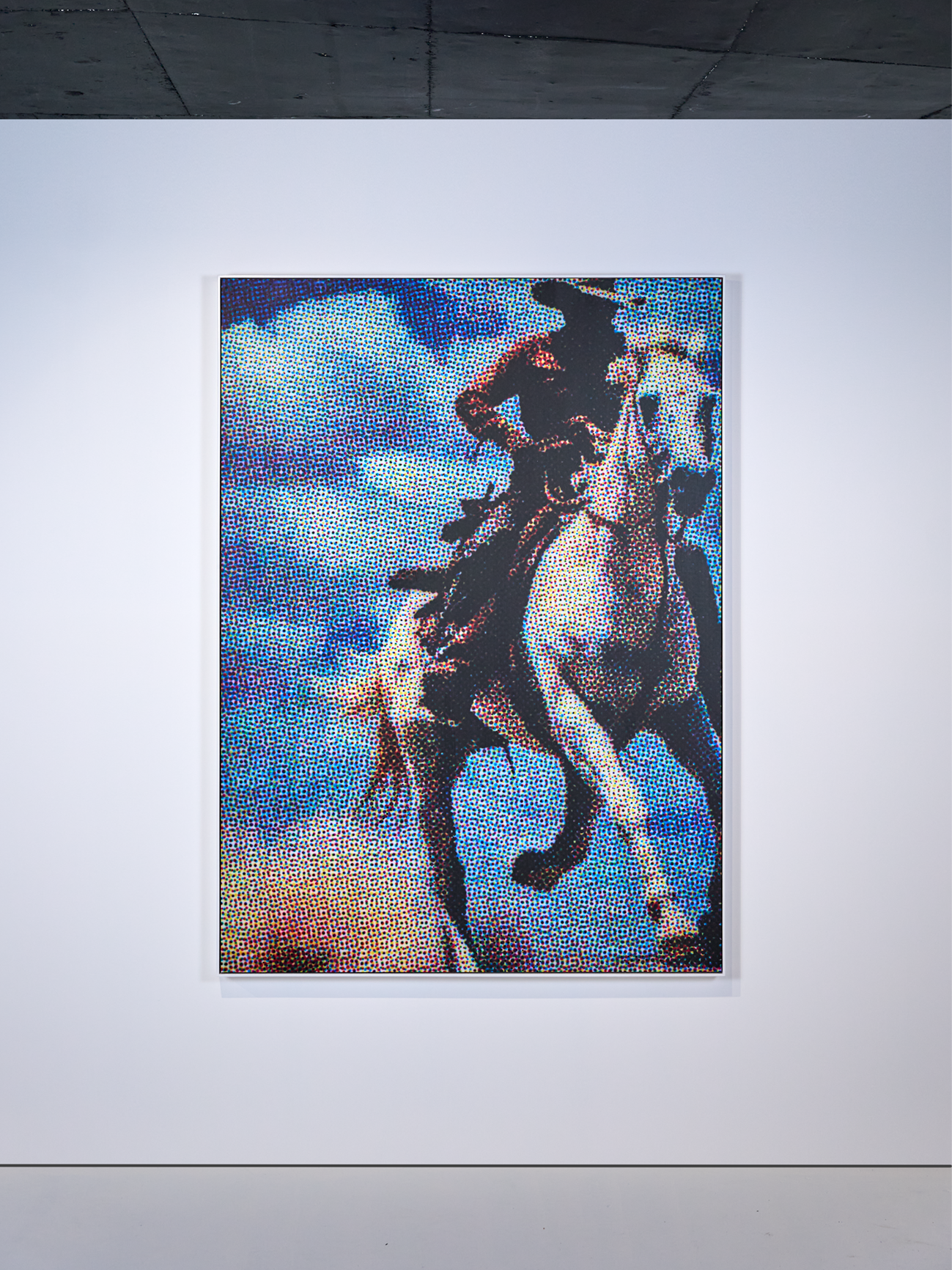
Untrained (Cowboy), 2025
CMYK airbrush polymer on aluminium, Oak Frame
130x180cm
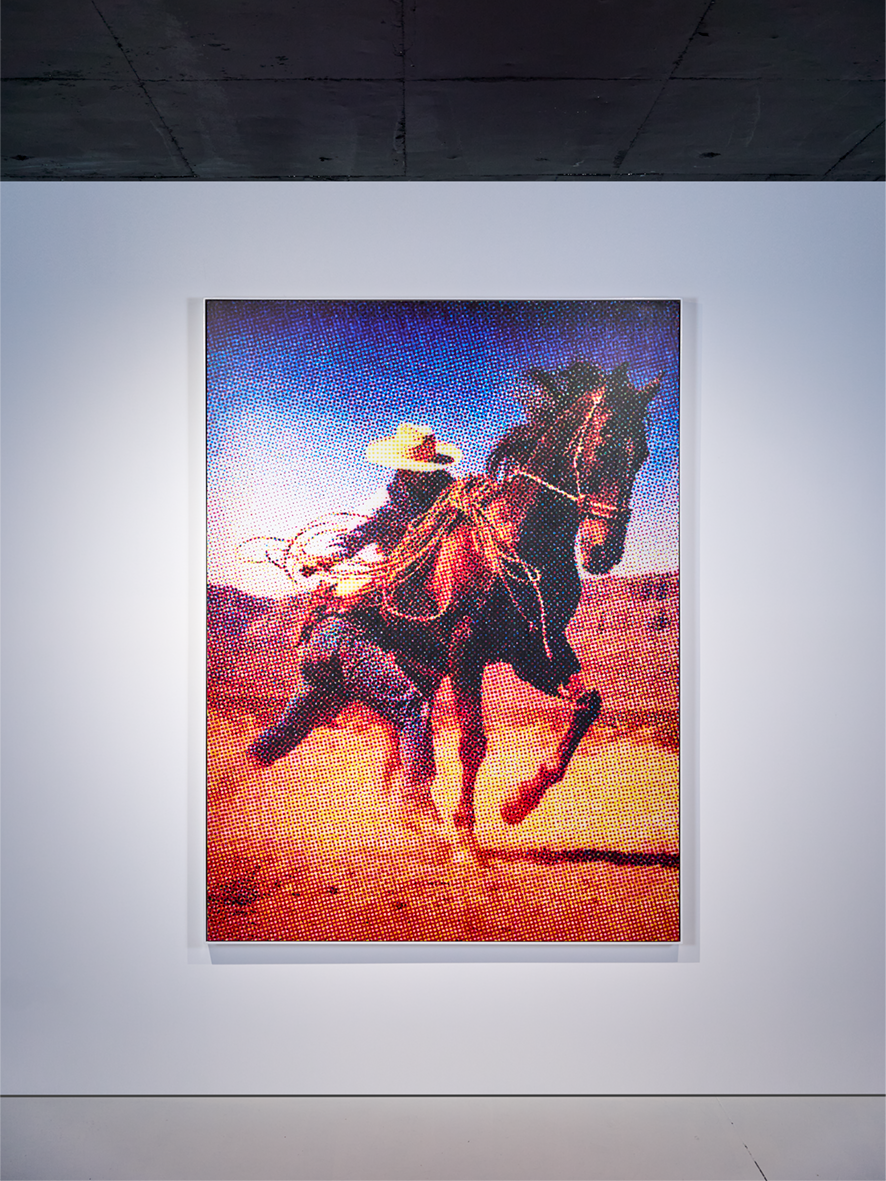
Centaurian, 2025
CMYK airbrush polymer on aluminium, Oak Frame
140x190cm
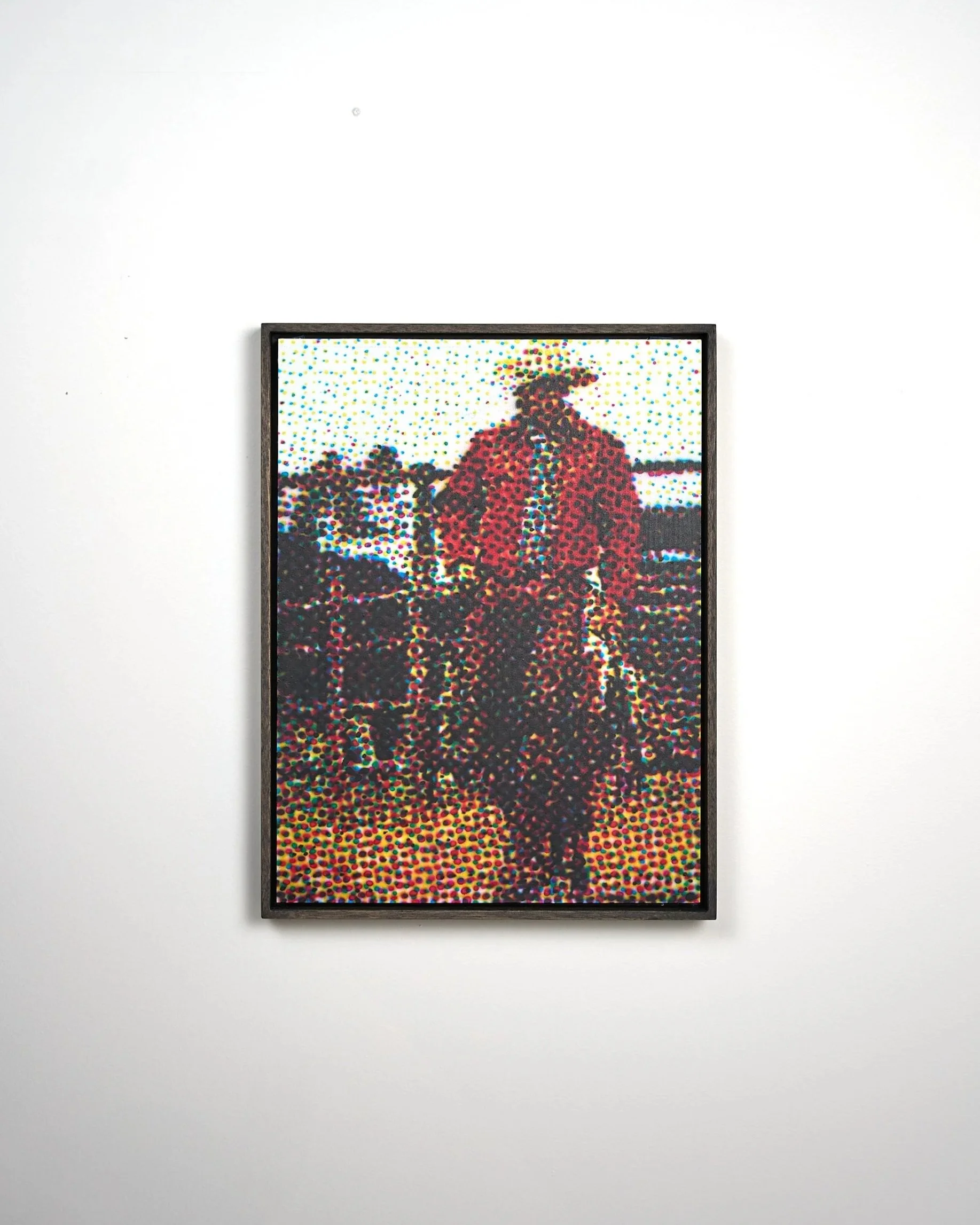
Centaurian Man, 2025
CMYK airbrush polymer on aluminium, Oak Frame
30x40cm
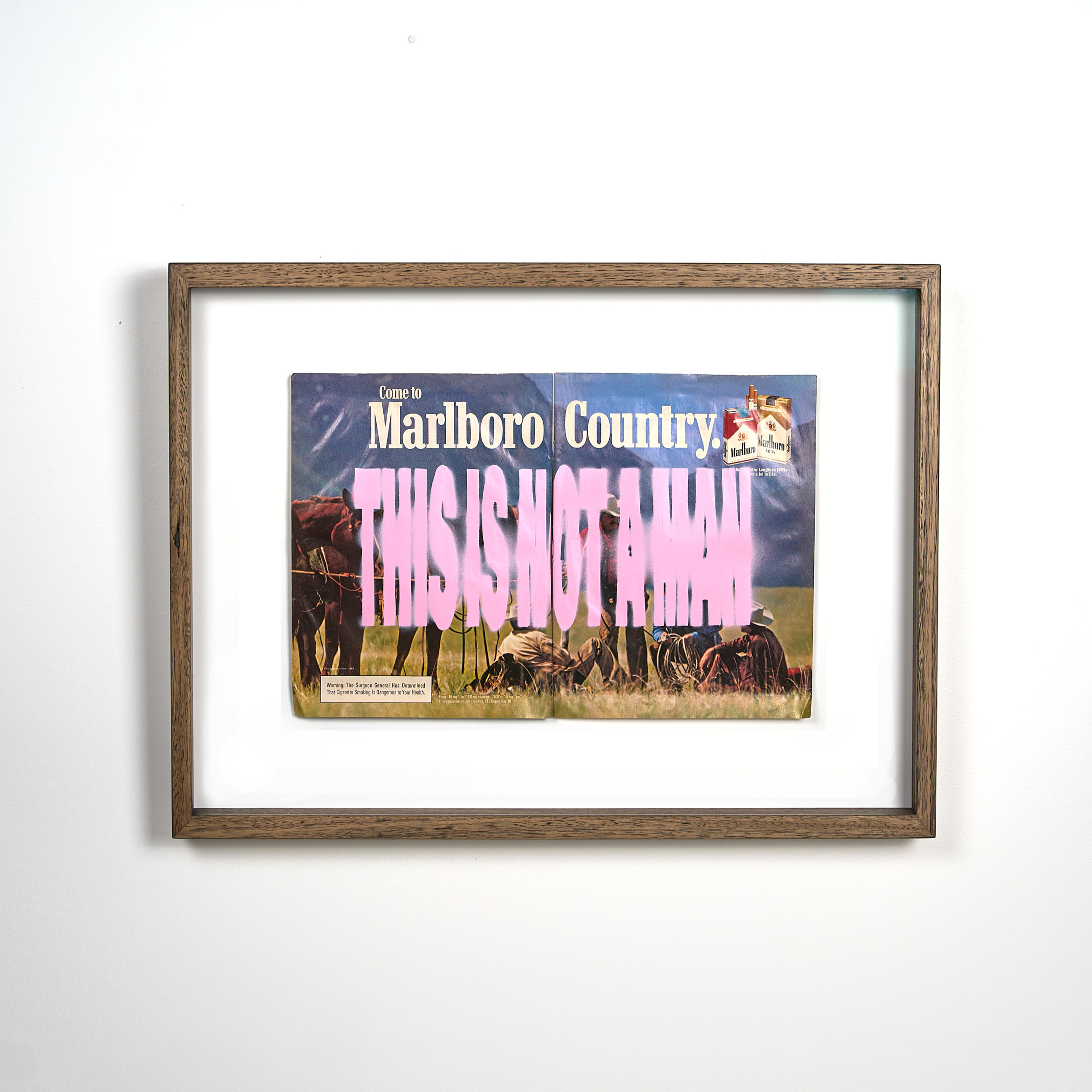
The treachery of Icons, 2025
Aerosol paint on vintage magazine advertisement, Oak Frame
53x67cm
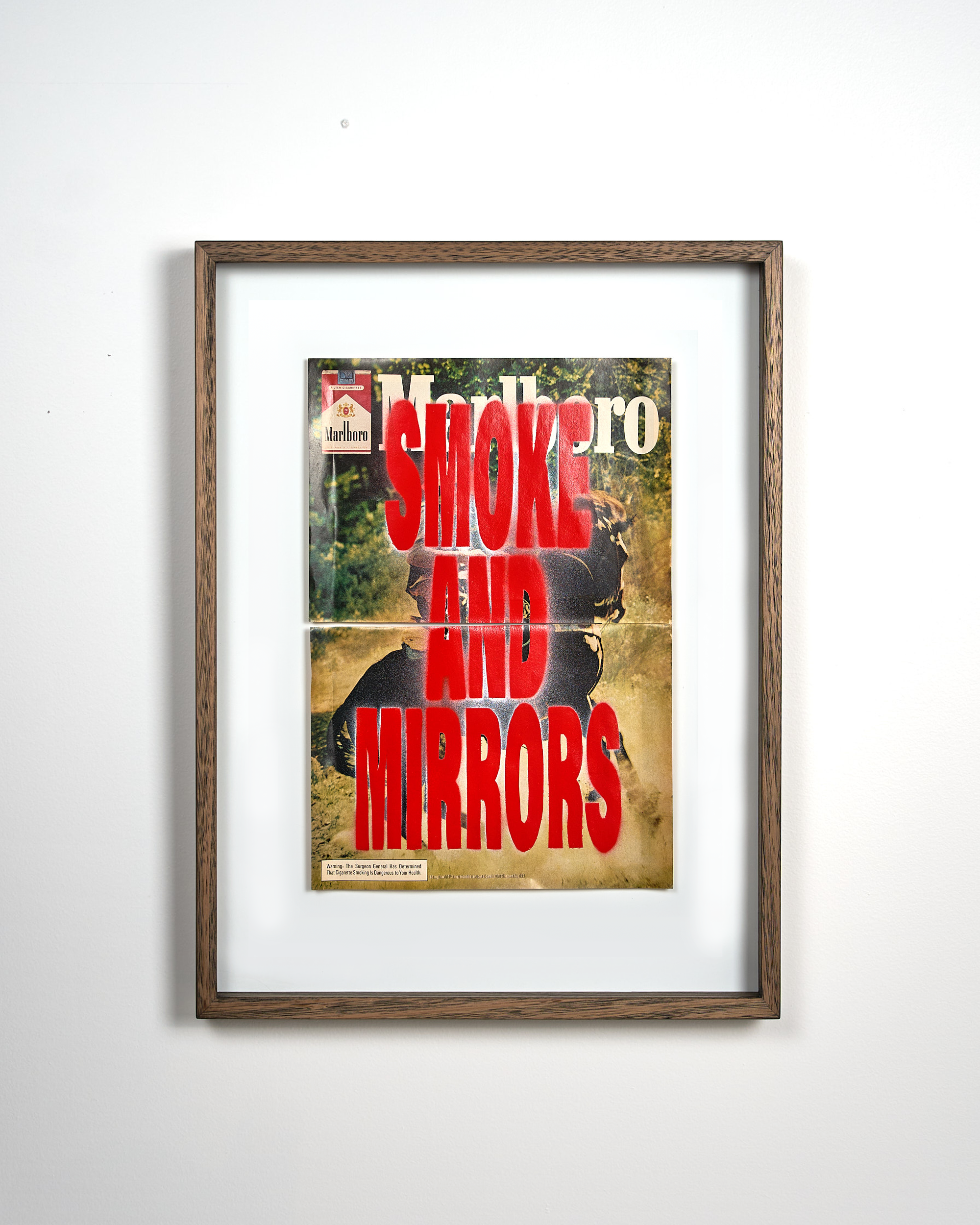
Curated Illusions, 2025
Aerosol paint on vintage magazine advertisement, Oak Frame
53x67cm
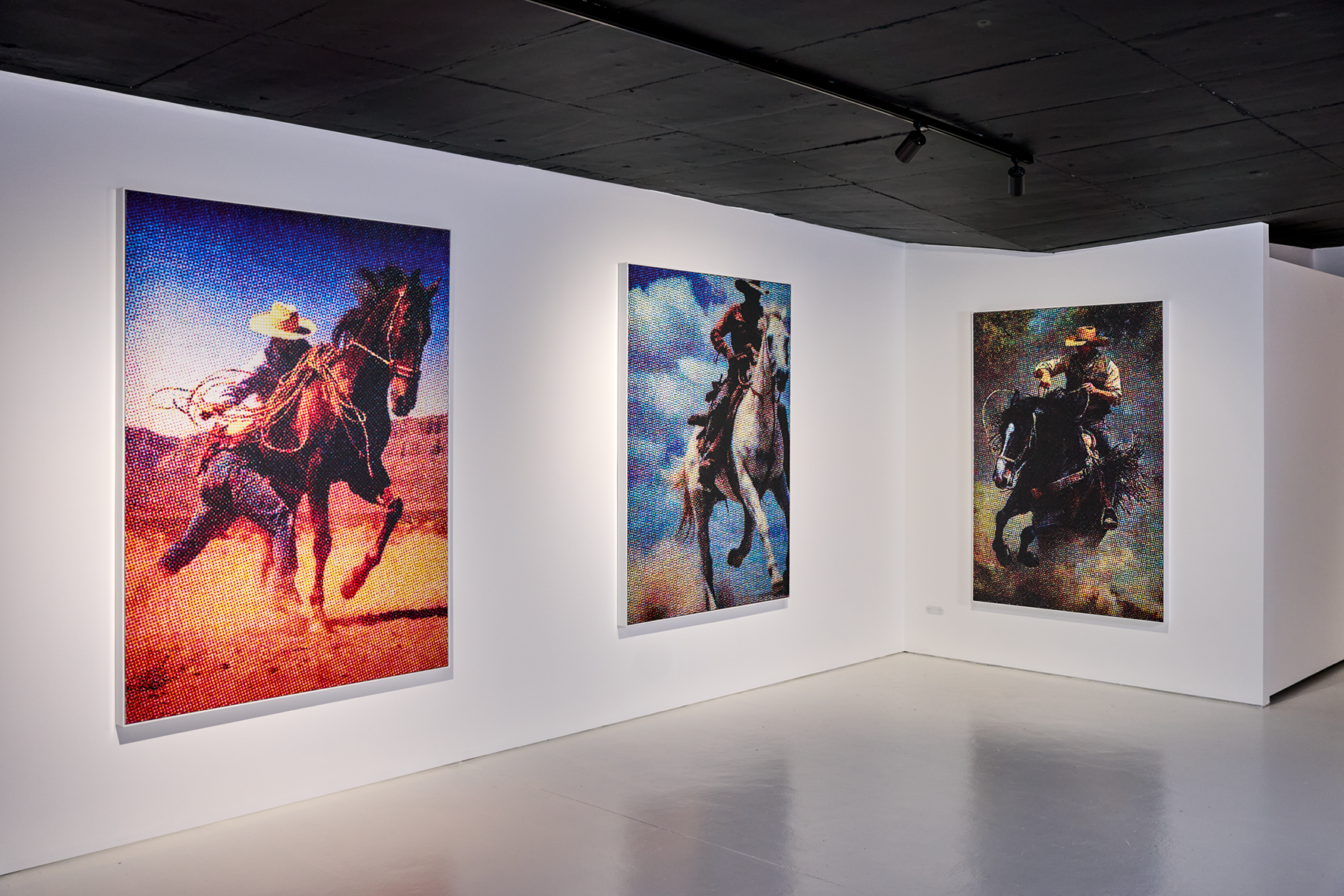
Gallery Installation
Thought Forms Gallery, Melbourne
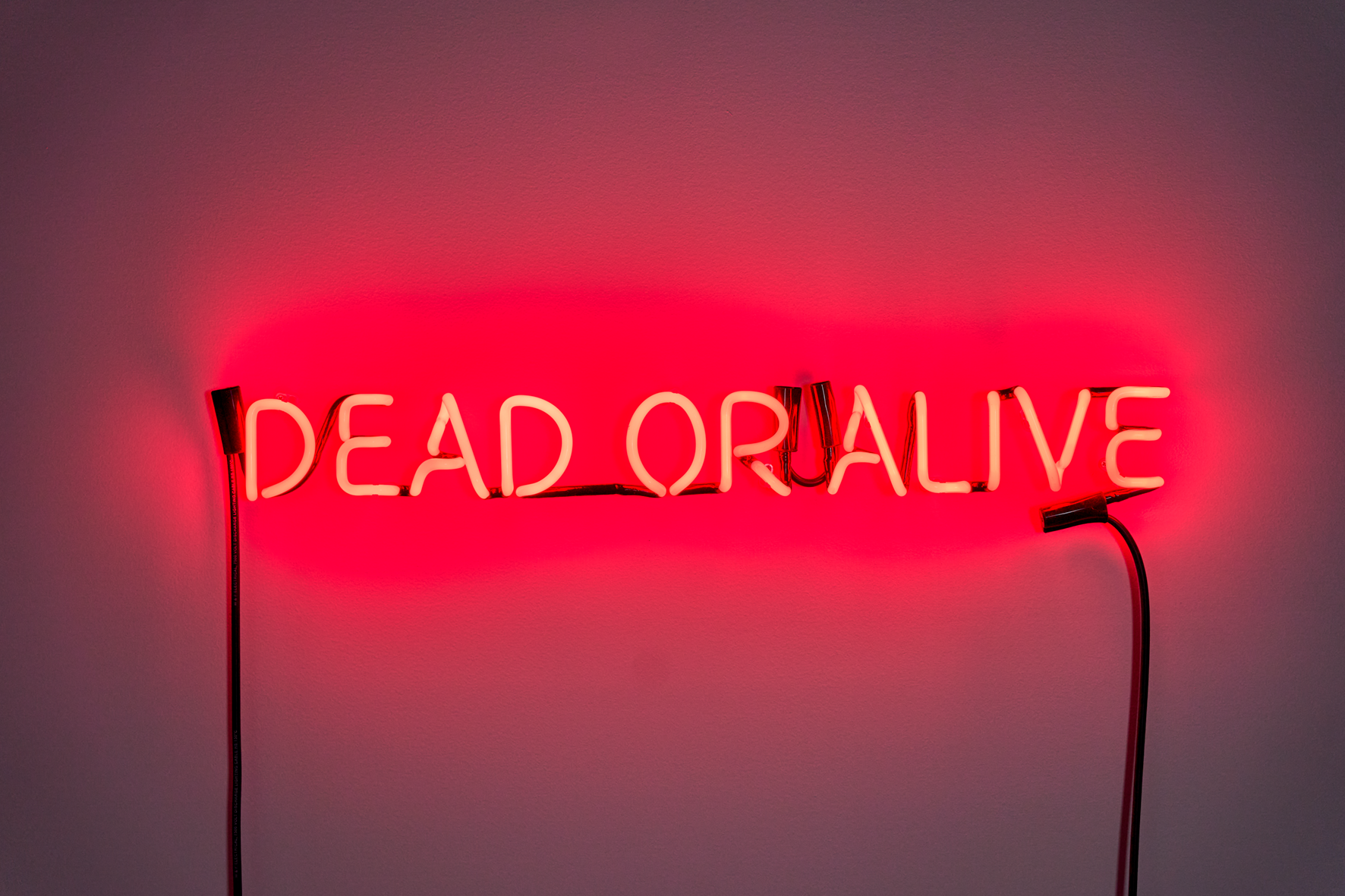
Transition, 2025
10mm Ruby Red-tinted glass with neon gas, 9Kv transformer. Edition 1/3
12x80cm
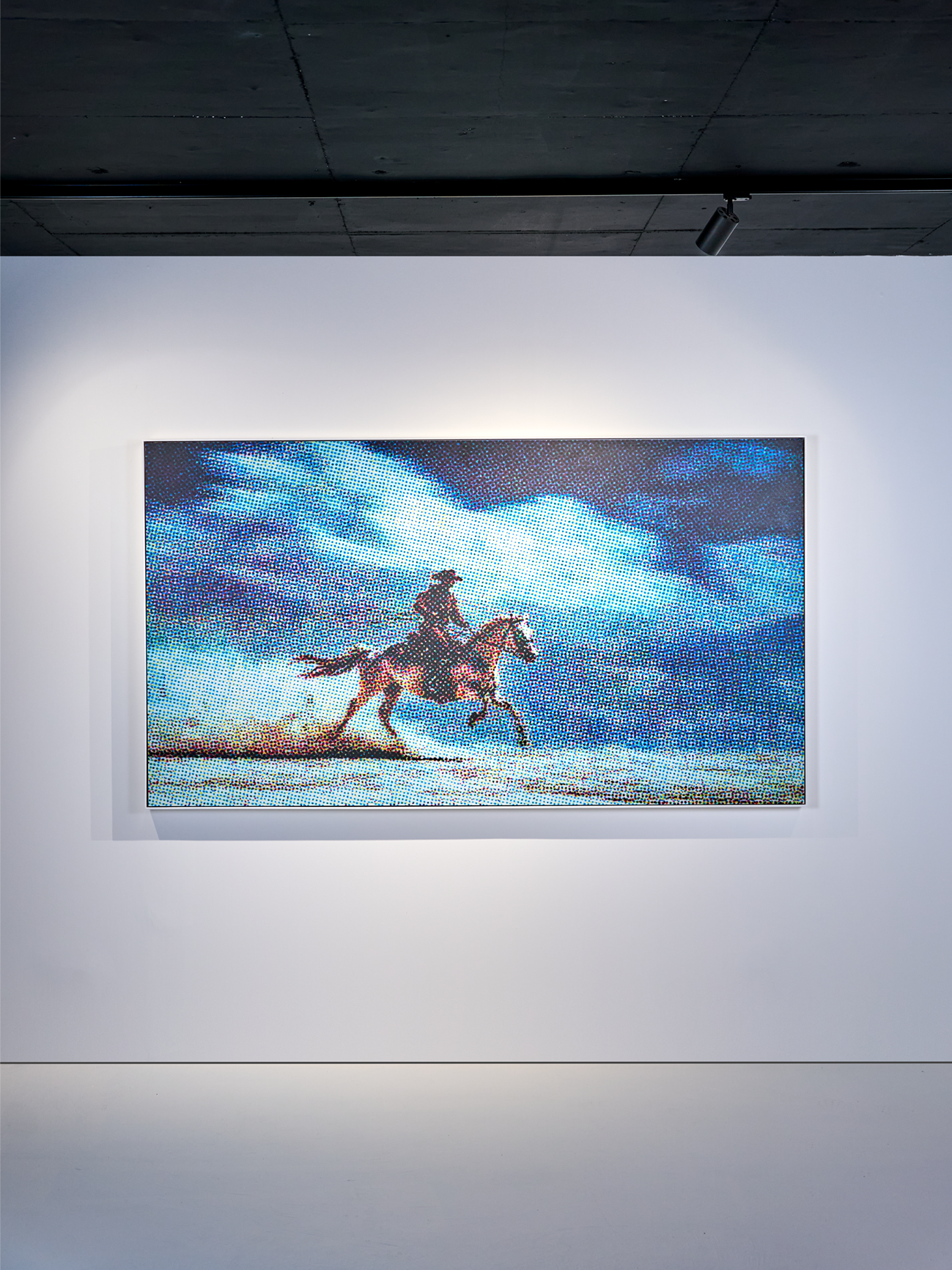
Speculator, 2025
CMYK airbrush polymer on aluminium, Oak Frame
122x220cm
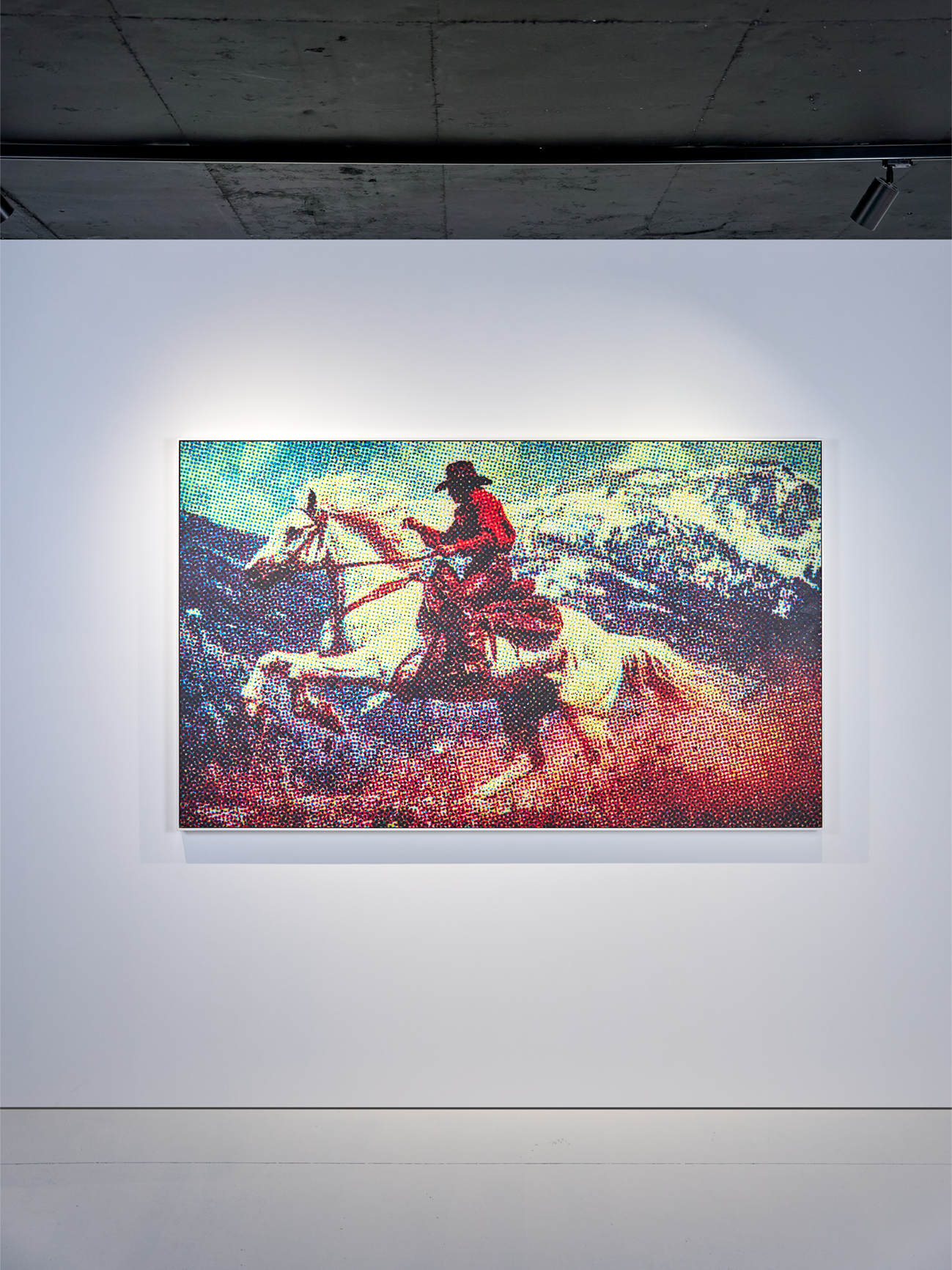
Digital Frontier, 2025
CMYK airbrush polymer on aluminium, Oak Frame
120x200cm
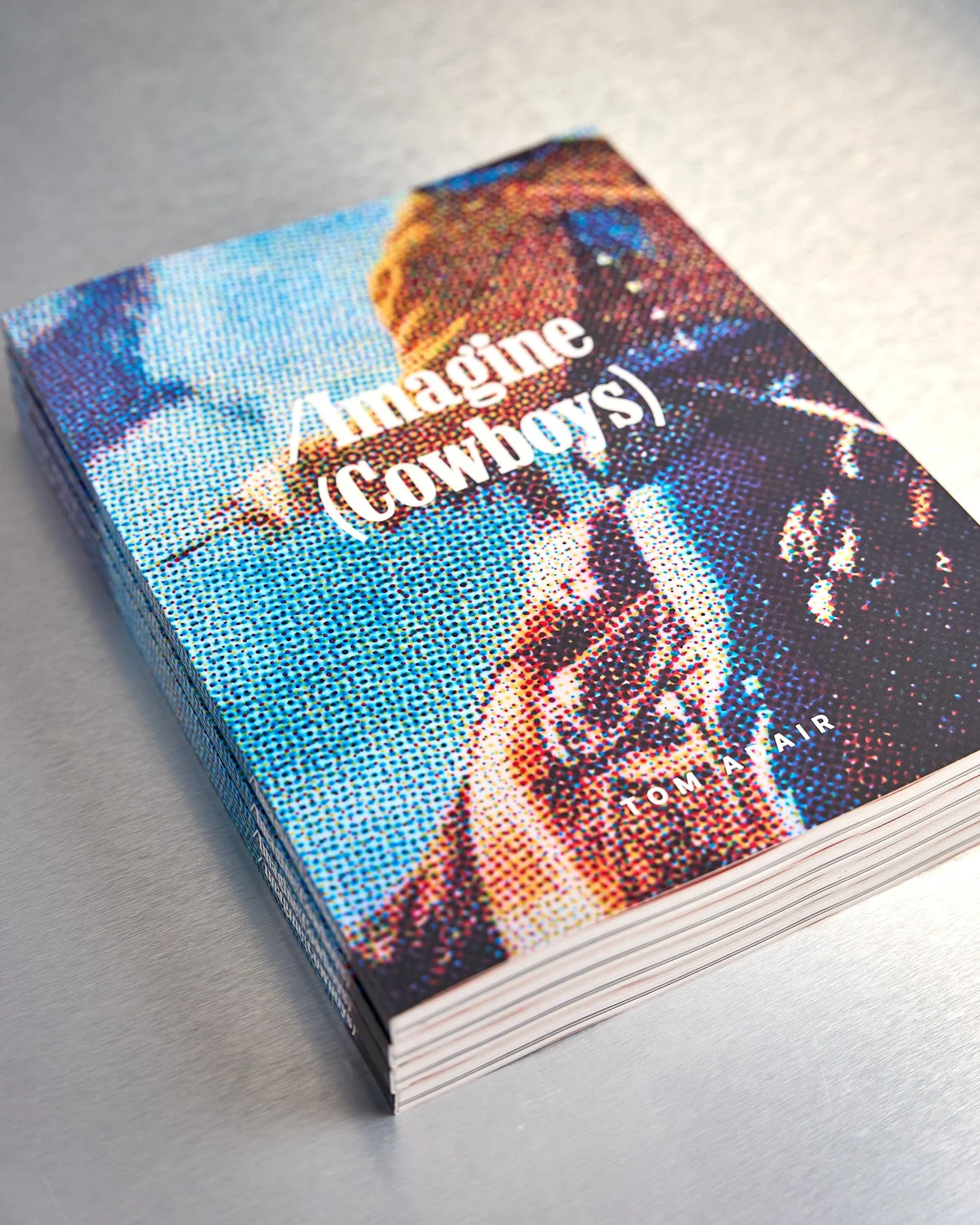
/Imagine(Cowboys) – Limited Edition Monograph
By Tom Adair (Signed)
Edition of 100
130 pages